Choose a useful application
Start with a real constraint, task or decision and test whether technology addresses the underlying problem.
Assess a bounded process for AI, automation or robotics. Connect the technology opportunity with data, workflow, skills and the practical changes needed to make it useful.
Bring one process and the question you want technology to answer.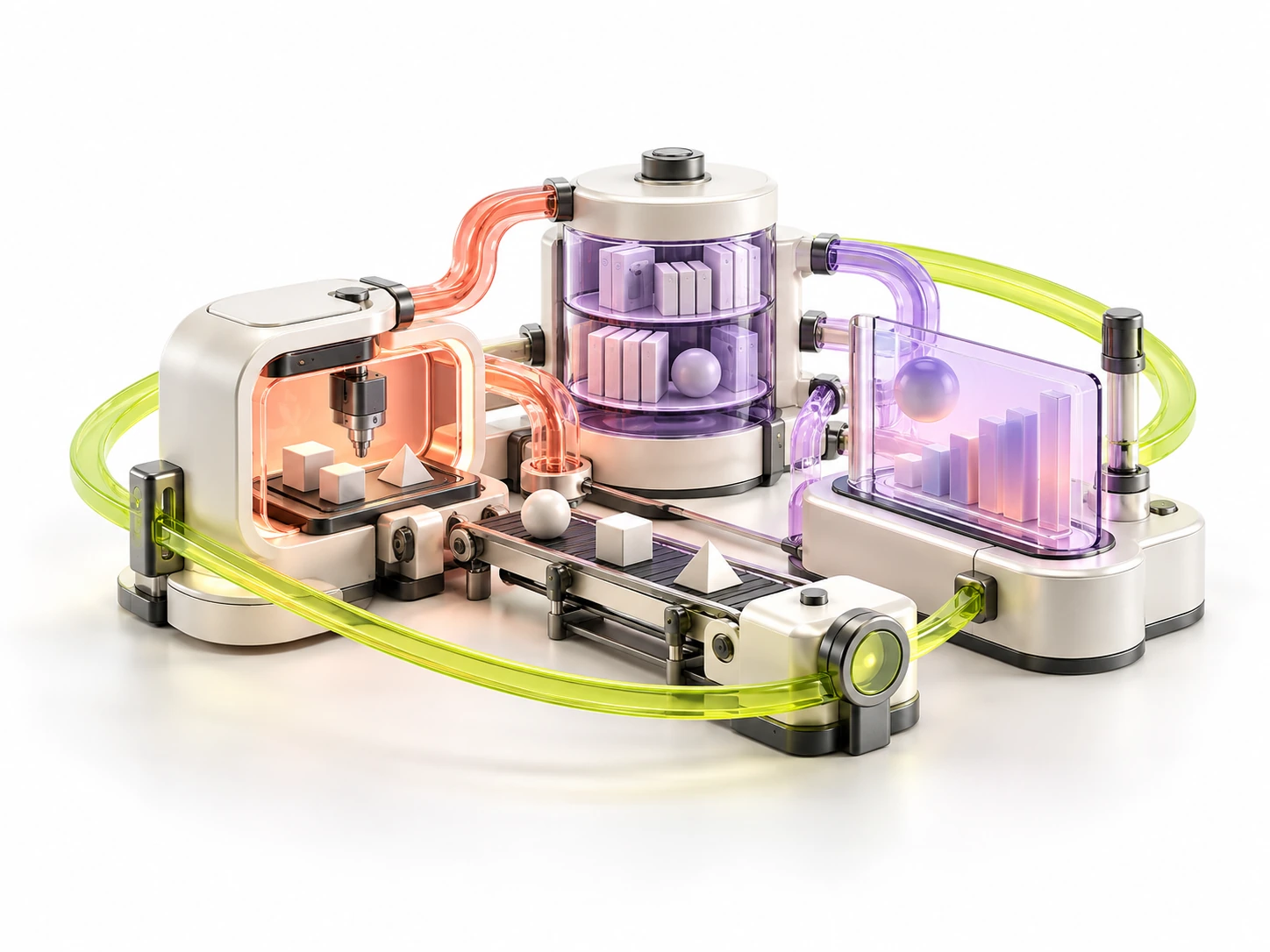
When a technology investment sounds promising but its operating requirements and business case are unclear.
Start with a real constraint, task or decision and test whether technology addresses the underlying problem.
Identify data quality, process stability, physical interfaces, skills and ownership before committing to a build.
Give management and specialist suppliers clearer requirements, assumptions and questions for a staged investment decision.
Start with the operational constraint: a repeated decision, avoidable handling, poor visibility or a task that is hard to perform consistently. Review workflow, variation, information quality, interfaces, skills and ownership before choosing a technology.
Compare AI, conventional automation, robotics and a simpler process change. A readiness engagement produces a bounded first experiment and a clearer brief for suppliers. Engineering, procurement, machine safety and implementation require their own agreed scope.
Readiness assessment from £2,880
24 consulting hours · Estimated delivery: 2-3 weeks
One site, one selected process or use case, up to four stakeholder interviews and one options workshop.
What you receive
Vendor selection support and implementation quoted separately.
Your input: A process owner, suitable records, observation access and IT, engineering and workforce input.
Hardware, coding, machine design, safety validation and procurement are outside the assessment. Specialist engineering is separately scoped.
Indicative starting fee for the stated scope, normally one site of around 100 employees. VAT where applicable, expenses, licences and separately scoped technical work are additional unless agreed. Final scope and fee are confirmed before work begins.
Use agreed operating baselines and test assumptions before estimating investment return.
Supplier knowledge, commissioning lessons and new supervision requirements need a route into approved guidance and practical competence. The Factory Learning System helps connect a technology project with the people who will operate, maintain and improve it.
See how the learning system supports changeTell us about one operation, task or management question you would like to improve.